
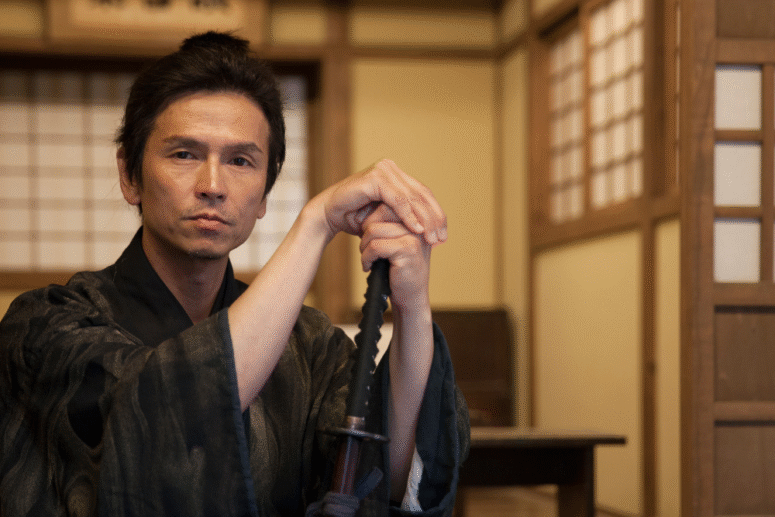
In the series of blog posts Self-Mastery TalentX explores how peak performance is built from within. Through science-based tools and practical strategies, the focus is on developing mental and physical strength that leads to sustainable results.
The author of the series is Igor Šehić, a performance coach, mental trainer, and founder of Rize, who works with elite athletes, executive teams, and ambitious professionals. His approach is grounded in science, experience, and personal discipline — because Igor doesn’t just teach performance, he lives it.
How to navigate conflict and tough conversations without losing your cool.
Anyone working in today’s fast-paced business world knows how fast a normal workday can turn into a pressure cooker. One email lands wrong. A meeting goes off the rails. Someone pushes the same old button and suddenly your breath shortens, your jaw tightens, and your nervous system flips from strategy mode to survival mode. In that moment, you’re not choosing your response. You’re reacting to the chaos. And even the most disciplined professionals feel the urge to snap, shut down, or walk away.
At that moment, you don't choose a reaction, you react instinctively.
Even the most stable of professionals feel the urge to flare up, retreat or fight back impulsively.
In environments with constant demands and high pressure, losing your temper isn’t a
small slip.
It’s expensive:
- it damages trust
- it breaks communication
- it lowers team performance
- it destroys psychological safety
- it creates hidden fear that kills creativity
Feels familiar? Good. Now picture this:
Same environment. Same people. Same pressure.
But your triggers don’t fire anymore. You stay calm while everyone else loses their center. Your clarity disarms aggression. Your tone resets the room. You become the person no conflict can shake.
This is why in elite sports and now in elite business, emotional regulation isn’t a “soft skill.” It’s a performance skill. And like any performance skill, it’s trainable.
But nothing changes because this paragraph inspires you. It changes when you deliberately train your nervous system the same way elite athletes train composure under pressure.
Most professionals simply hope for the best… until a conflict exposes every trigger they have.
What comes next is the opposite of hope: a step-by-step protocol to rewire how you respond under pressure.
Step 0: Understand What’s Really Happening in Your Brain
Before you learn any technique, you need to understand one thing: you’re not losing control because you’re weak or unprofessional. You’re losing it because your biology is doing its job.
Here’s what actually happens when tension hits.
Your amygdalathe brain’s threat detector fires first. Not only for physical danger, but for tone, facial expression, unexpected questions, sharp emails, or anything that feels like social risk.
The moment it activates, your body shifts into survival modeheart rate rises, breathing becomes shallow, muscles tighten.
Now for the key part. When the amygdala takes control, prefrontal cortex, the part of the brain responsible for logic, emotion regulation and decision-making, temporarily withdraws from the management position.
It's not damaged. Just overpowered.
That's why you don't see the nuances in a conflict, you don't think clearly, and you don't choose the best response.
That's not your weakness. That's biological mechanism.
Be Master of ZEN does not mean to remain calm at all costs,
than keep your prefrontal cortex active while everything around you tries to provoke your reactivity.
And that is exactly what the following steps are for.
Step 1: Change your perspective
Knowing what moves or triggers you is useful, but it's not enough.
If your emotional stability is based on controlling every WHAT, all it takes is one unpredictable situation to throw you off balance.
And WHAT is most often a constant.
Same comment. Same tone. Same pattern of behavior.
What changes is the environment. People react unpredictably. Pressure appears out of nowhere.
Real change happens when instead of WHAT bothers me, you start asking: WHY does this even affect me?
Why does this trigger have so much power over me?
Why do certain situations so easily pull me into reactivity?
Why does my biology take control faster than I can consciously react?
For a long-term solution to the problem, you have to stop extinguishing every spark as soon as it appears. Put down the hose for a moment and let the fire burn. Not to ignore it, but to stop treating the symptoms and start understanding the system that creates them.
Now ask yourself the key question. In three weeks, do you still want to be running around, exhausted, reactive, putting out small fires?
Or do you want to become like a river? Strong, rooted, unwavering…because you know how to cooperate with your own biology instead of fighting against it?
Perspective changes the moment you stop trying to control the external world and start mastering the internal mechanism that reacts to it.
When that clicks, you're ready for the next step.
Step 2: Create a safe environment
You can't train your nervous system in the same environment that overwhelms it. Before any technique, you need a space where your defense mechanisms can subside, even for a few minutes.
Emotion regulation does not begin with skill, but with certainty. The nervous system does not learn new patterns while in defense mode. It needs a stable, predictable environment in which it can shift from survival to learning and adaptation.
A safe environment doesn't have to be anything grandiose. It could be a corner of your living room, a balcony, nature, or a room where you feel grounded and calm. The important thing is that your body recognizes that place as a space where you can:
- relax the defense
- slow down reactions
- to be completely you
It's your laboratory. A place where you experiment, build new things, reset and empower yourself.
Because no tool, such as breathing, meditation, visualization, and relaxation, will be effective if the body does not feel safe enough to adopt it.
When you create that space, your brain can finally learn. And then you're ready for the day that awaits you.
Step 3: Prepare your nervous system before the day begins
Most people try to regulate their emotions in the midst of conflict. It's like trying to learn self-defense after the punch has already landed. Too late. Real emotional control is built before you enter the pressure zone.
Top performers like athletes, special forces, and astronauts have the same rule: prepare the system early to remain stable later. This doesn't mean you have to turn your mornings into a spa ritual. It means you're training two key abilities of your nervous system:
- Conscious activation
- Controlled sedation
Here's how to practice it in your own safe environment:
- a) Intentional discomfort
Exposure to cold, more challenging training, or short-term intensity sends the message to the brain: „I’m stressed, but I’m safe.“
That's how you learn to distinguish discomfort of threats. This is the foundation of resilience in conflict. - b) Deep regeneration
After activation comes regulation.
NSDR or deep relaxation protocols reset the nervous system, reduce stress hormones and keep the prefrontal cortex online. It's like upgrading your operating system before the workday. - c) Breathing
Long exhalations, physiological sighs, and box breathing activate the vagus nerve and reinforce a calm, regulated basic tone of the nervous system. This allows you to think more clearly, react more slowly, and make decisions that are more deliberate and precise.
You can't control people, situations, anyone's behavior or mood. But you can control state in which you approach them. If your nervous system starts the day stable, nothing can throw you off balance.
Stability begins before the world even touches you.
Step 4: Set an intention before you step into the day
A regulated nervous system provides stability, but intention provides direction.
If you start the day without a clear intention, you enter it reactively, letting someone else's tone and mood determine how you feel and behave. One harsh email is all it takes and your focus is lost.
That's why the best professionals start their day with a simple message to their brain: „"This is the person I want to be today."”
Here's how to set an intention effectively:
- Identity – decide which version of yourself you want to embody
(„I stay calm under pressure.”) - Behavioral anchor – choose one specific practice for that day
(slower tone, one breath before answering, attentive listening) - Outcome – decide how you want to end the day
(„I want to be proud of the way I reacted.”)
This is not a mantra or a mere motivation. This is neurological guidance, a strategy used by elite athletes, military units, and people working under high stress. By doing so, you are telling your system in advance what behavioral patterns are activated when stress occurs.
When your intention is clear, conflict doesn't catch you by surprise. You meet it prepared.
Prepare your body. Focus your mind. Then step into the day.
Step 5: What to do before, during and after the conflict
Conflict is not overcome in theory but in real situations. Slowly, imperfectly, and with persistent repetition. Just like any other skill.
This is a simple protocol that you can practice:
- Before the conflict (the moment you feel the tension)
- take one slow, long breath out — signals safety to the nervous system
- lower your shoulders — the body is currently relaxing
- remember the intention — „How do I want to react right now?”
These few seconds prevent the amygdala from taking control.
- During the conflict (in the heat of the moment)
- slow down the tone – slower speech keeps the prefrontal cortex active
- take a two-second break – the micro-pause changes the impulsive reaction into a conscious choice
- ask a question before you answer – questions reduce tension and open space for a solution
- Answer from clarity, not emotion. – because your role is to lead, not react
This is micro-training under pressure. This is where control is built.
- After the conflict (when the dust settles)
- reconstruct the situation without criticism – What got you started? What was good? What could be better?
- confirm what you did correctly -you record a small victory as a new reference pattern
- change one thing for next time – small adjustments + repetition = growth.
This is where neuroplasticity occurs. This is where the neural network of resilience expands.
You don't become emotionally stronger by avoiding discomfort, but by entering it. Consciously, calmly, step by step.
Over time, what once turned you on no longer moves your axis. That's not a coincidence. That's training.
The business skill most people never practice
Emotional regulation doesn't mean being calm. It means being effective when it matters most.
Anyone can function when everything is calm. But in the long run, the winners are those who remain calm when the room heats up. Those who keep their prefrontal cortex active while everyone else slips into reactivity.
That's your advantage. Your competitive strength.
And like any skill worth having, it develops through repetition. Breath by breath, moment by moment, conflict by conflict.
You don't need perfection. You need consistency.
If you intentionally train your nervous system, change is inevitable. Reactivity becomes choice, tension turns into clarity, and conflict becomes a space where you give your best.
Most will never practice this. That's why they stay reactive and you can become a leader.
